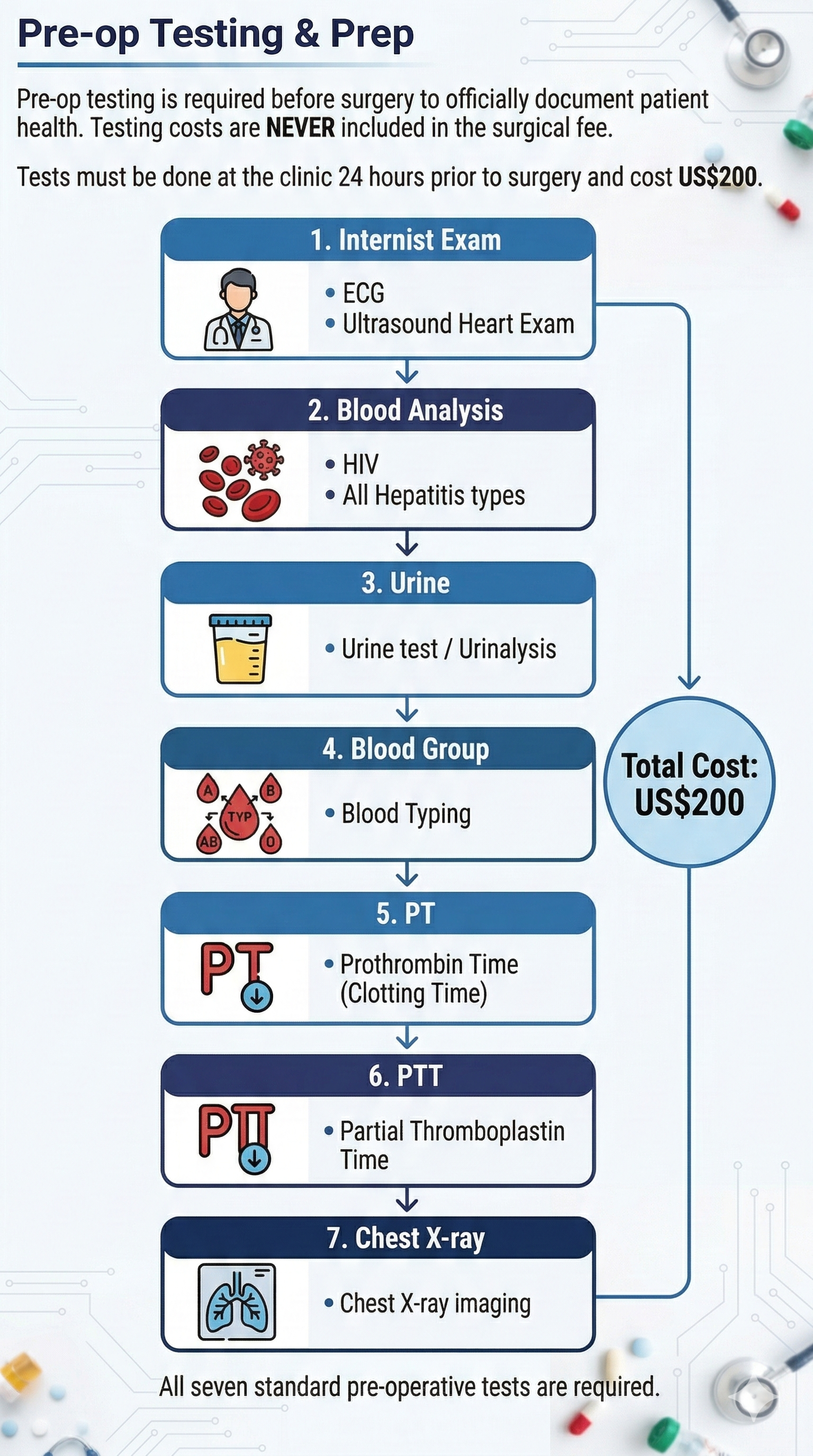
Pre-op testing is required before all open and laparoscopic surgery to officially document that a patient is strong, healthy and that it is safe for the person to undergo the operation. The cost of testing is NEVER included in the surgical fee.
The tests need to be done at the clinic 24 hours before surgery and cost US$200. It can take up to 72 hours to undergo the test, get the results returned to the clinic, and have Dr Kim evaluate them. In other words, tests on a Monday means surgery will probably begin early on Wednesday.
The seven standard pre-operative tests include:
Adult blood tests need to include HIV, Hepatitis B & Hepatitis C. Those infections do not disqualify a patient from surgery in Korea but there are strict protocols about where surgery can be performed for patients requiring special care for infectious diseases.
For some cases, we may be legally required by infectious disease protocols to have the surgery at the National Medical Center. That will increase some costs. It may also increase mandatory recovery time in hospital (also increasing cost).
Everything medically related that is used or administered in the clinic for any treatment or surgery is included in the price quote. If an additional cost is to be incurred, Dr Kim will inform the patient in advance, keeping costs totally transparent and voluntary.
In South Korea, a clinic is not legally permitted to sell medicine for use by the patient outside the clinic. For example, all post-op drugs such as pain killers and and antibiotics must be purchased from an external and independent pharmacy. For most cases, the cost of post-op drugs is likely to be moderate — perhaps US$50. Dr Kim will write prescriptions for all medicines needed.
Dr Kim says:
"Patients with HIV, HBV and Syphillis need to be treated with medications for more than two week before surgery, to reduce the infectiousness of the viruses.
The purpose of pre-operative screening tests is to help people, not to create hurdles in front of them.
If the infections are controllable, the disease itself is not a matter of concern."
Everything else medical is included in quoted prices. On the day of surgery, a patient will need to stay in the clinic after treatment until at least 7 pm, perhaps overnight, before returning to the person's accommodations.
Patients must begin fasting from water and food starting from midnight the night before surgery. A patient can eat light food after surgery.
The primary way to prepare well for surgery and increase the probablility of a good, swift and uneventful recovery and healing is:
A patient who is not ideally prepared for surgical recovery should consider staying longer under the beneficial direct supervision and aftercare of Dr Kim.
Some patients may find it desirable to prepare the donor tissue or surgical area using laser hair removal to achieve hairless genitalia.